Results and Conclusion
Results
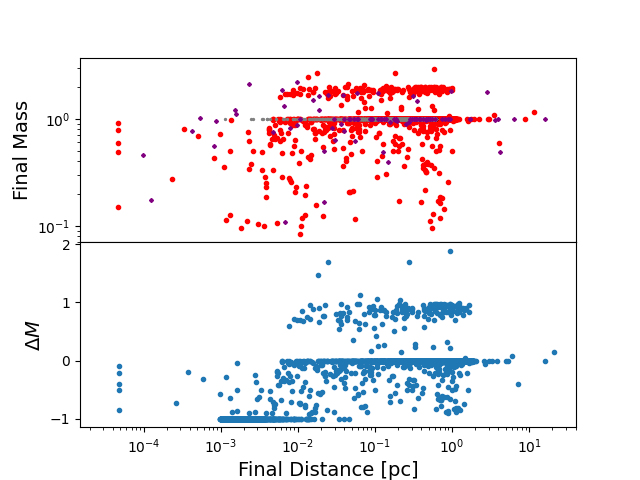
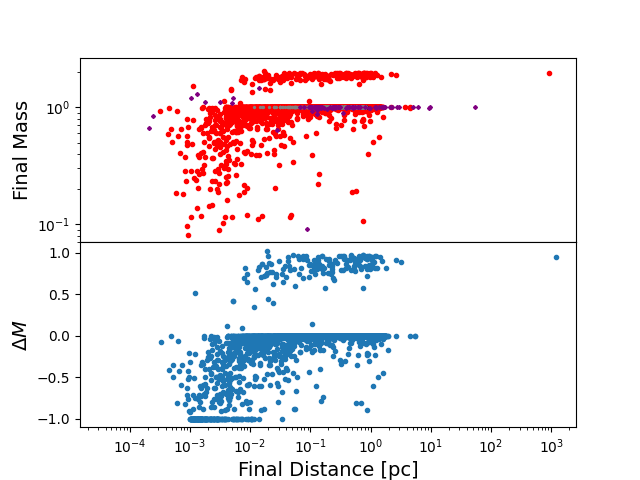
After simulating 4000 stars, we find that ~17% experienced an
MDE, ~2% were ejected from the cluster (pictured by the purple
diamonds), ~1% experienced a TDE due to relaxation effects, and
~0.1% experienced a TDE due to a high-speed collision that altered
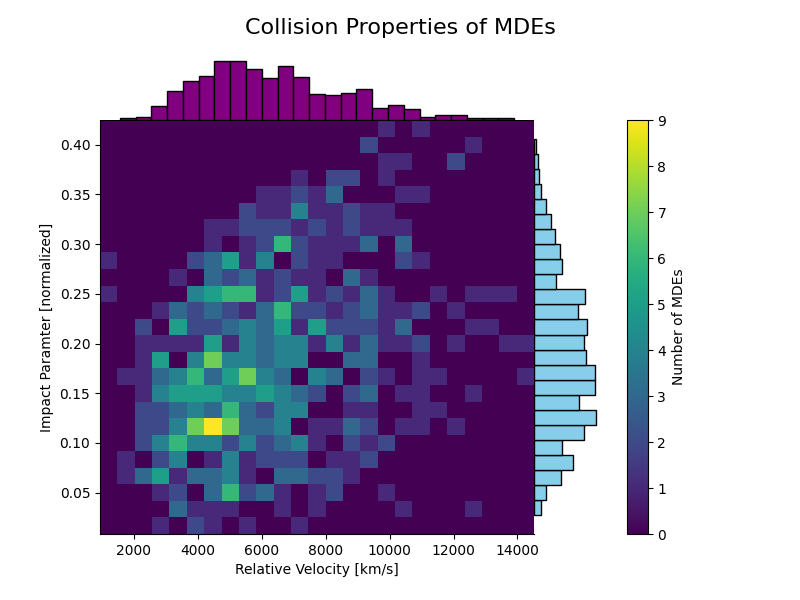
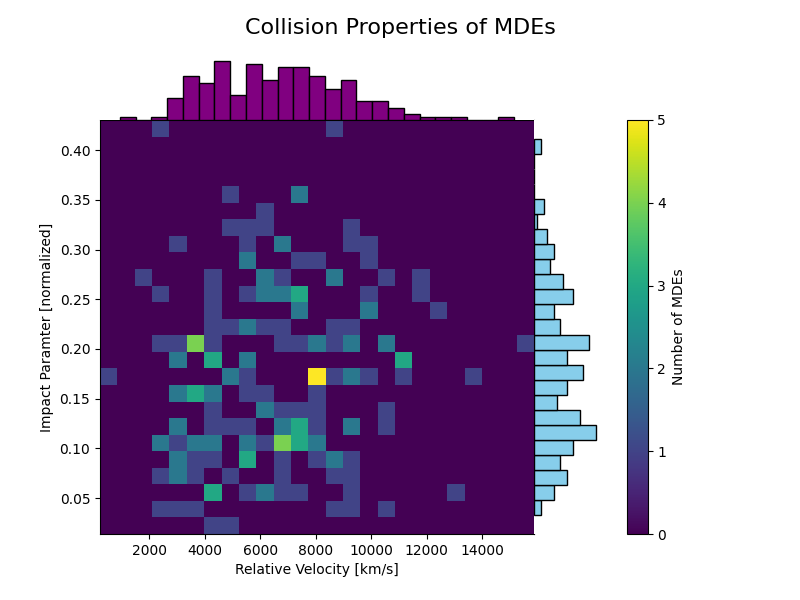
its orbit. When looking at the stars that experienced an MDE
(pictured below), we find that these collisions are typically due to
high speed (average relative speed of ~6000 km/s) and directness
(average of ~0.2 normalized periapsis separation). We also find that
MDEs typically occur after a star has lost mass over a series of
previous high-speed collisions (often 10 or more collisions). We can
see that all of these collisions occur with a relative speed of at
least 2000 km/s and at least a .26 normalized impact parameter. This
value can be interpreted as at least 74% overlap between the two
stars before their collision. These conditions are likely due to the
high speeds and dense population near the SMBH. The stars with a
final mass of 0 M⊙
(MDE stars) all lie within 0.1 pc of the SMBH, with a majority lying
within 0.01 pc for both α = 1.25 (bottom) and α = 1.75 (top).
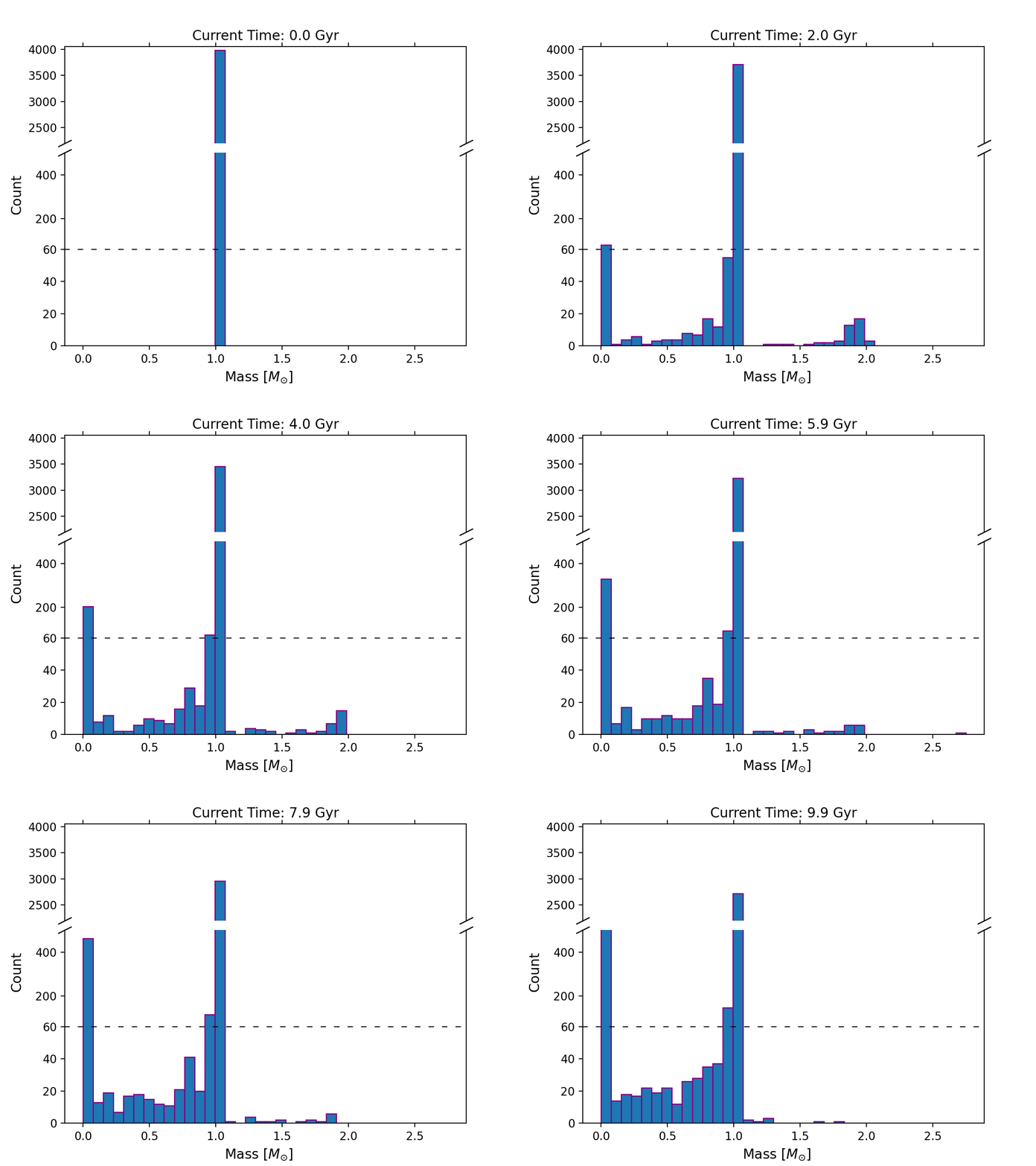
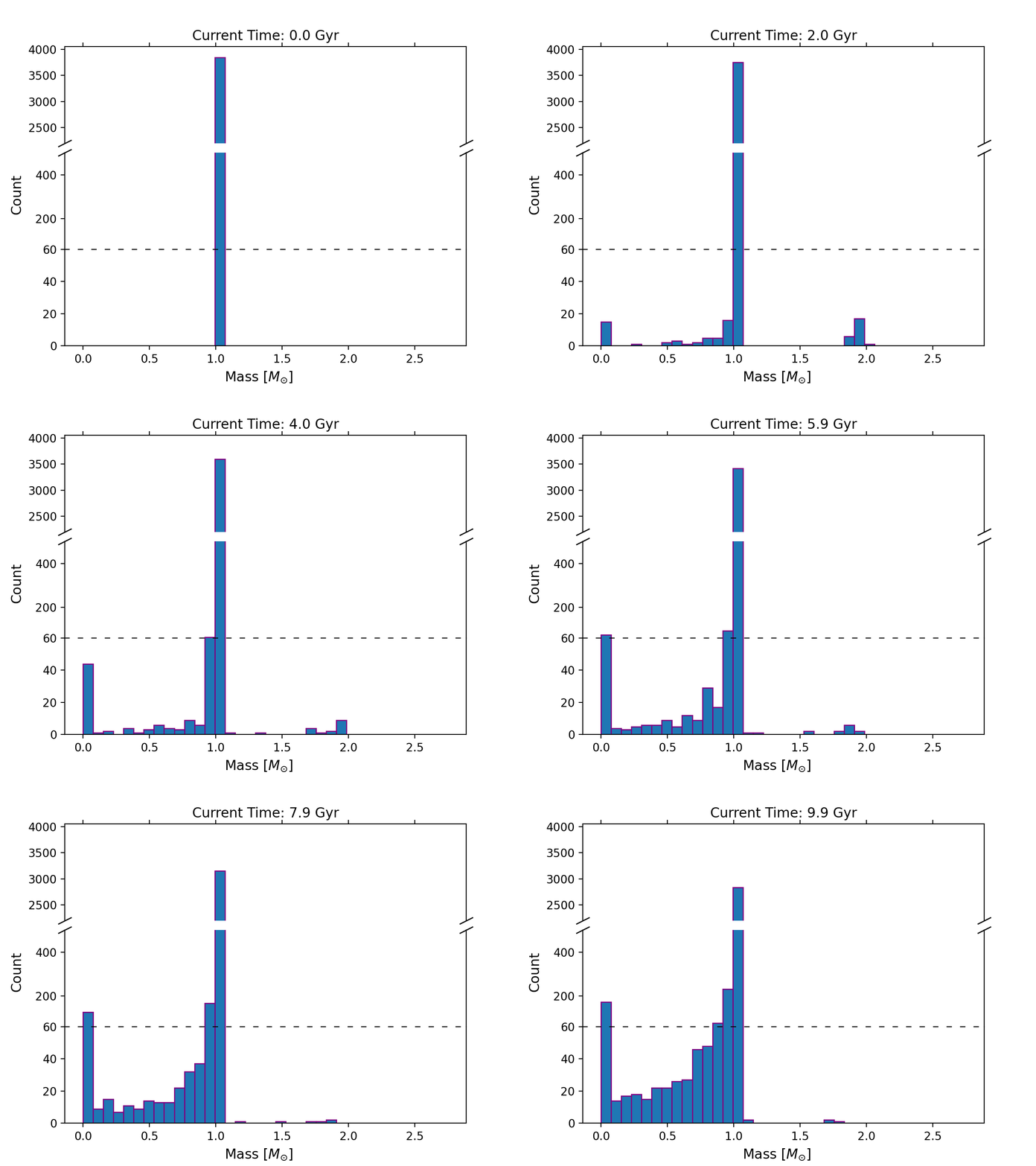
In this small movie, we can see the evolution of the mass of the
star cluster with α = 1.75. All 4000 stars are assumed to begin at 1
M⊙ and a majority of stars don't experience a collision.
As shown, stars that experience typical collisions have their mass
slowly reduced over the course of multiple collisions. After a
certain number of collisions, these stars experience an MDE which is
pictured by the large bar on the far left (representing 0 M⊙
stars). On the right of the 1 M⊙ bar, we can see the
merger cases which exhibit the same properties on a smaller scale:
after merging, these stars will experience collisions that slowly
reduce their mass over time. This population typically dies out
faster due to their shorter lifetime. Below, we can see similar
plots for α = 1.25.
Conclusion
Collisions between stars occur in the galactic cluster and are more common closer to the SMBH due to the high speeds and larger population density [7]. We can simulate how these collisions effect a stars evolution in these dense clusters and what conditions lead to MDEs, star ejections, and TDEs. We find that we are able to achieve qualitatively similar results to previous studies while using ML to predict the outcomes of collisions. Overall, we find that by using ML, we are able to efficiently and accurately classify the outcome of star collisions. By utilizing ML, we can accurately model the evolution of dense star clusters in the galactic center.
References
[1] Neumayer, N., Seth, A., & Böker, T. 2020, A&A Rv, 28, 4
[2] Rose, S. C., Naoz, S., Sari, R., & Linial, I. 2023, arXiv
e-prints, arXiv:2304.10569
[3] Rees, M. J. 1988, Nature, 333, 523
[4] Balberg, S., Sari, R., & Loeb, A. 2013, MNRAS, 434, L26
[5] LeCun, Y., Bengio, Y., & Hinton, G. 2015, Nature, 521,436
[6] Genzel, R., Eisenhauer, F., & Gillessen, S. 2010, Reviews of
Modern Physics, 82, 3121
[7] Rose, S. C., & MacLeod, M. 2024, ApJL, 963, L17